
Network probes
Run ICMP, HTTP, TCP, TLS, and DNS checks with typed settings.
Kemuri is a single-node latency monitor for Linux. It runs ICMP, HTTP, TCP, TLS, and DNS checks. It stores results in SQLite and shows them in smoke-style graphs.
One Kemuri process schedules checks, writes results, evaluates alerts, and provides the web UI and HTTP API.
Run ICMP, HTTP, TCP, TLS, and DNS checks with typed settings.
Keep rounds, rollups, revisions, and alert events in one SQLite file.
Evaluate profile-based rules and send webhook or SMTP notifications.
Use readiness, liveness, Prometheus metrics, SSE, and the version 1 API.
The web UI is part of the Kemuri binary. It does not need a separate web server.
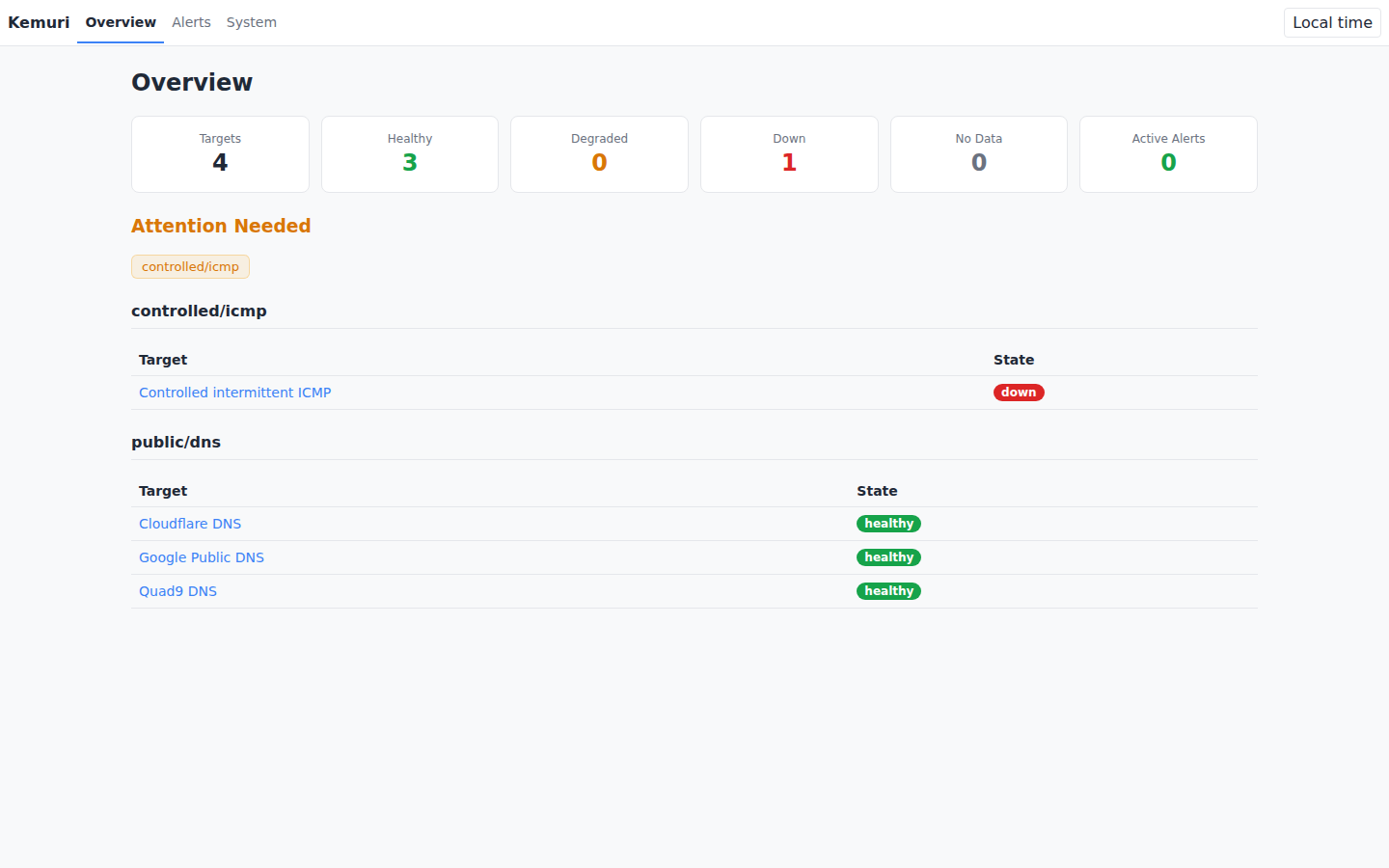
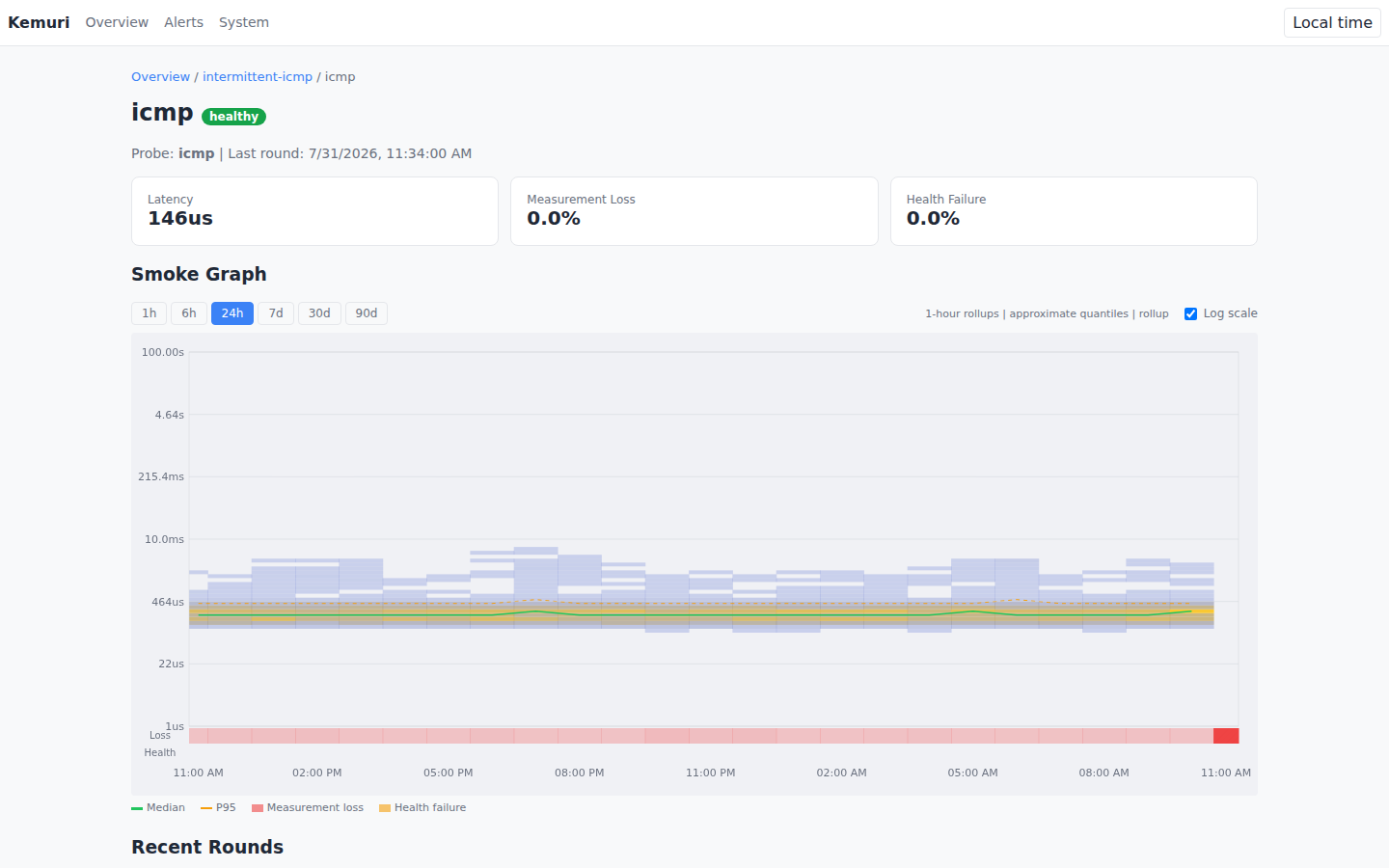
Release archives are available for Linux, macOS, and Windows. The service runtime supports Linux.
curl --proto '=https' --tlsv1.2 -LsSf \
  https://github.com/stianfro/kemuri/releases/latest/download/kemuri-installer.sh | sh
Read the installation guide for packages, containers, systemd, and ICMP permissions.
Kemuri is for one process on one trusted Linux host. It does not include login, high availability, remote probes, or a distributed scheduler. Put it behind a trusted reverse proxy when other users can reach the host.
Kemuri is an independent implementation inspired by SmokePing. Kemuri does not contain SmokePing source code and is not affiliated with the SmokePing project. Read the source provenance for the source and dependency rules.